Measles
Measles information for healthcare providers and local health departments
Resources for clinicians
- Measles testing flow chart
- Clinical assessment guide for measles Utah 2025
- Measles reference labs
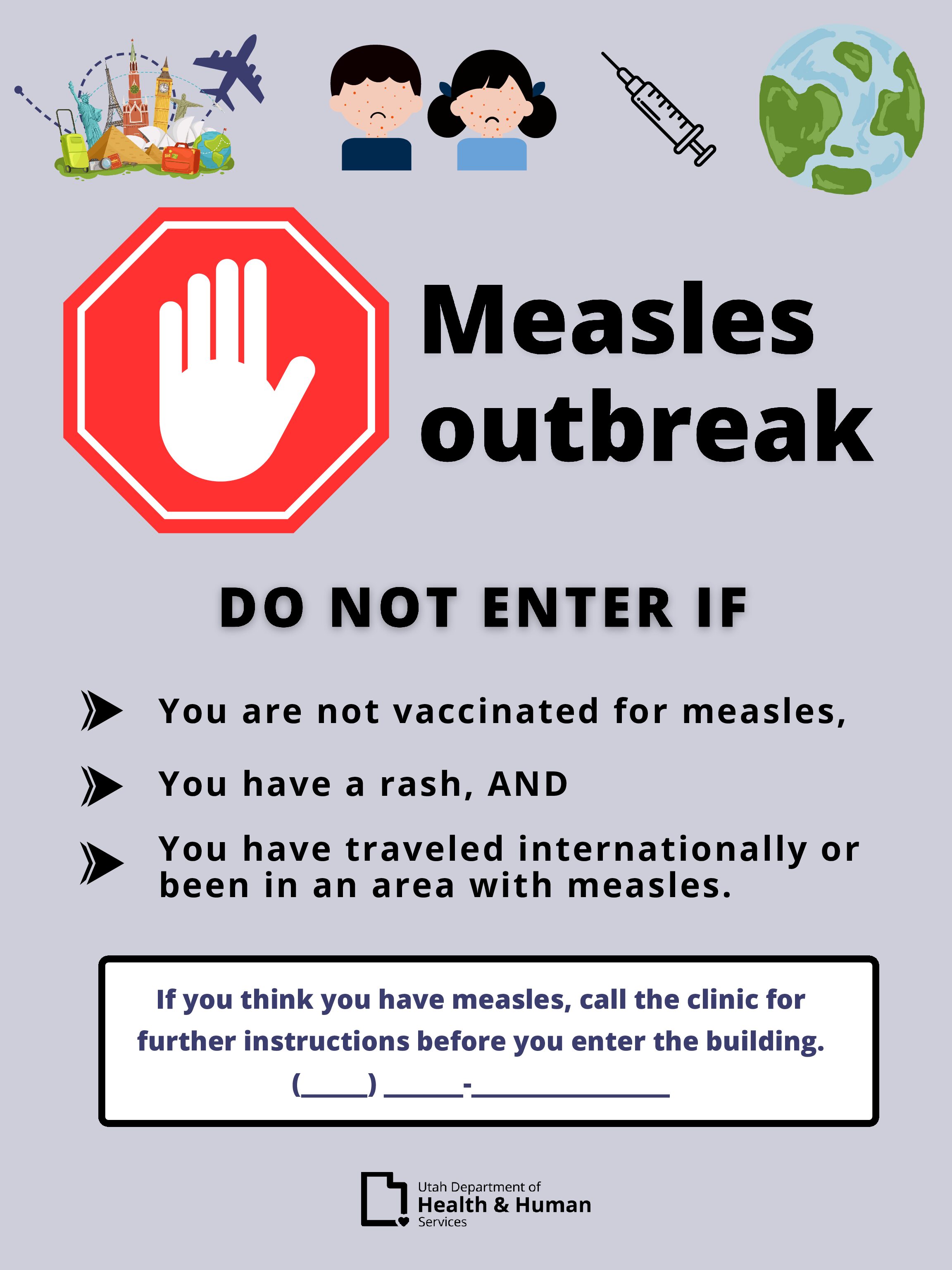
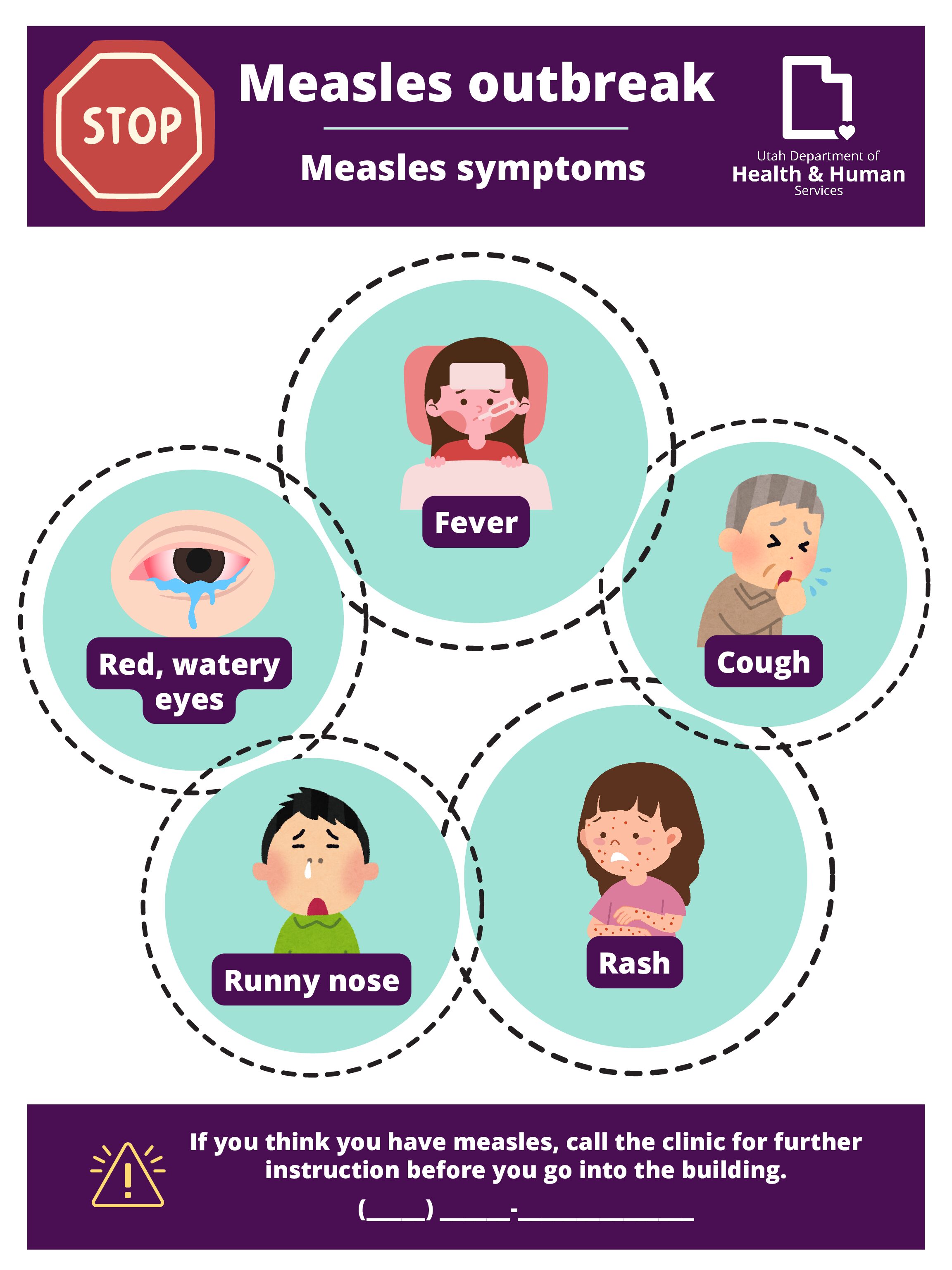
- Recognizing measles in healthcare clinics
- Measles clinician guidance
- UPHL specimen collection and transport guide (Electronic copy)
- UPHL specimen collection and transport guide (Printable copy)
- Vaccine-preventable disease testing guide for medical providers
- Utah immunization guidebook


Clinician guidance on early MMR vaccination
Infants younger than 1 year old who live in or plan to travel to Utah
Given the level of undetected community spread throughout Utah, we suggest clinicians discuss the option with parents to provide an early, extra MMR dose for infants who are 6 months through 11 months of age. The Utah Department of Health and Human Services is aware of many events where all people in clinic waiting rooms have been exposed to measles. While surrounding babies with vaccinated adults is excellent protection, events such as clinic waiting room exposures pose a real risk. Use the information below to consider both the risks and benefits for each family.
- In places where measles is not actively spreading, an early, extra dose is not typically encouraged for the following reasons:
- The dose is "extra." This early dose does not count toward the primary series. The child will still require the standard 2 doses starting at or after 12 months of age.
- Efficacy concerns. Data suggest many infants may not derive high levels of protection from this early dose, possibly due to maternal antibodies blunting the immune response.
- Long-term immunity. There is some evidence that children who receive an early dose may experience a more rapid decay of antibody titers later in life, potentially resulting in lower overall protection as adults.
However, the risk for contracting measles in Utah is higher than normal, so we recommend thoroughly discussing this option for an early, extra dose with all parents of unvaccinated infants 6–11 months old. It is appropriate to follow the standard guidance for early vaccination for international travel for Utah infants at this time. An early, extra dose is allowable for infants 6 months of age and older. Any infant who gets an early, extra dose will need to get 2 later doses in accordance with the standard vaccination schedule at 12–15 months and then a dose at 4–6 years.
Note: MMRV vaccine (measles, mumps, rubella, and varicella) should not be given to infants younger than age 1 year; instead MMR should be used.
Early, extra dose for infants who are traveling internationally
It is a standard recommendation to give an early, extra MMR dose to infants who are going to international locations. This recommendation has not changed.
Second dose before 4 years of age
Although the second dose of MMR vaccine is typically recommended at age 4–6 years, clinicians can give the second MMR dose to children older than 1 year as long as it has been at least 28 days from their first dose (see details below if considering giving MMRV).
- Data show children mount a strong and long lasting immune response as long as the second dose is at least 28 days after the first dose if using MMR or 3 months if using MMRV (see additional details for MMRV below).
- Providers can give the second dose early, however it is important to recognize the protection provided by just 1 dose is excellent (93% vaccine effectiveness) even before the second dose. A second dose increases protection to 97%.
General vaccination recommendations
The general recommendations for the MMR vaccine are as follows:
- First dose at age 12 months through 15 months.
- Second dose at age 4 through age 6 before they enter school. The second dose can be administered as MMR or MMRV.
It is appropriate to give a second dose to any person, regardless of age, who has only received 1 dose. Catch up vaccination is not routinely recommended, but given the current high levels of measles spread in Utah it is appropriate to consider this second dose for adults to maximize their protection.
MMRV: If you use MMRV for the second dose, make sure it has been at least 3 months since the person had their first dose. In addition, separate MMR and varicella vaccines are recommended for any infant younger than 47 months of age to reduce the risk of febrile seizures.
We strongly encourage vaccination of all people older than 1 year of age, regardless of an exposure risk. One of the best ways to protect kids is to surround them with protected adults.